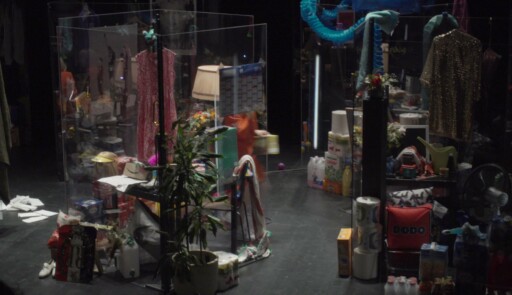
This content contains scenes that may shock an uninformed audience.
Do you still want to watch it?
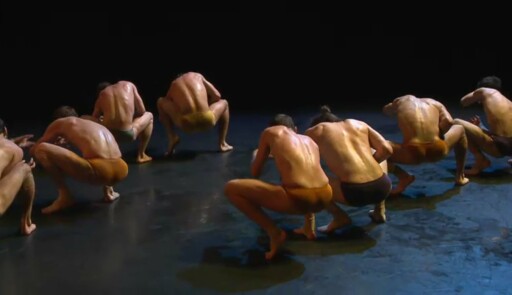
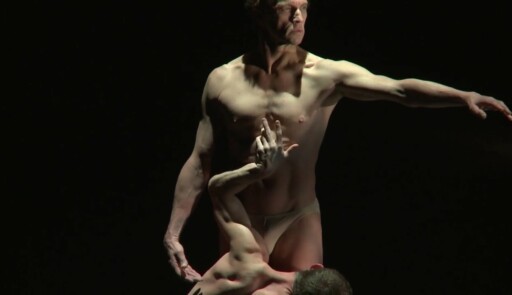
Le Festin
Seated around a large table, the “guest spectators” are invited to take their places as close as possible to the dance. “A dance performed forwards and backwards, done and redone, written and rewritten,” says Claude Brumachon, who sought in this show to “immerse the audience in the heart of the material,” to experiment with them in a proximity bordering on promiscuity. “To be with the skin, under the skin, and feel the breathing, the breath, the exhalation! To feel (…) the quality of the movement that bursts forth, with the sound wave of the echo of the fleeting gesture ringing in your ears. ”
Unfolding in rapid phases in successive, intertwining tableaux, Le Festin questions the mechanisms of our consumer society “that devours everything” and the ‘fatal’ and “repetitive” daily life to which humans submit.
In this dinner where the menu is alive, Claude Brumachon presents the dancers to the audience “as they are,” as “goods ready to be consumed.”
“The table is set and cleared. My dish: my dancer. The guests have nothing to eat but the raw energy of an artist in full action. The action of giving oneself, offering one’s life, one’s body, in a multitude of dissected, mixed moments.”
Source: Claude Brumachon (learn more)

![Miniature de la vidéo Le Sacre du printemps, Sacre #2 [transmission 2018]](https://numeridanse.com/app/uploads/2018/10/Le-Sacre-du-printemps-Sacre-2-transmission-2018-43872-512x295-c-default.jpg)