This content contains scenes that may shock an uninformed audience.
Do you still want to watch it?
La Mère
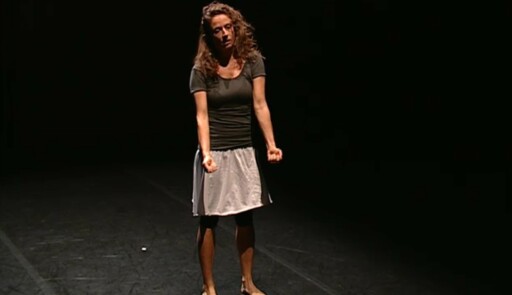
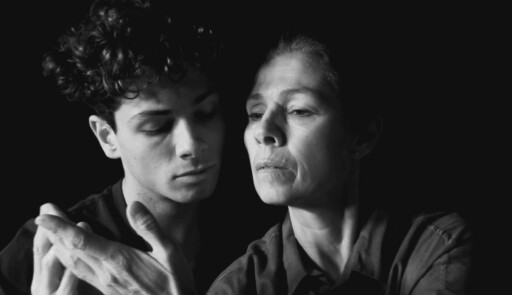
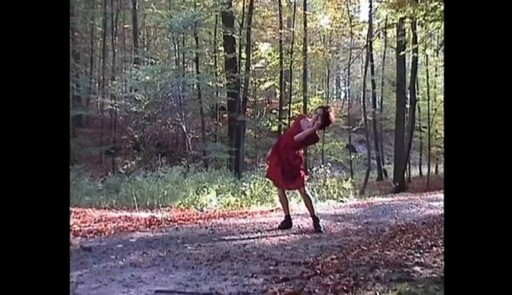
This solo is part of a dance ensemble, Impressions de Russie, on three studies by Scriabin. Isadora Duncan arrived in Moscow a few months earlier to found a dance school.
In the penury then affecting the whole of Russia, Scriabin’s mystical tones accompany the pain of a mother orphaned from her children. This gestural dance takes place on a single diagonal symbolising the course of life. A woman bends over, like a child that she seems to pull out from the earth. The phrasing of the gestures sculpts the space between the child evoked and the mother. The dialogue and their imaginary physical contact are enveloped in an earthly slowness supported by the ternary circle of the music. “True dance is the strength of pain,” writes Duncan. The child walks away, she follows him with her eyes, he returns, she embraces it fervently and lays him down in front of her. But her fingers, in a last caress, find only the ground. Still on the ground, the mother stretches her body to the distance in an ultimate gesture of farewell, of adieu.
Source: Dictionnaire de la Danse (CCN – Ballet de Lorraine 2004 – 2005)

![Miniature de la vidéo Dances for Children (Around the Linden Tree, Classical Duet, Three Graces, Écossaise, Ballspiel, Water Study) [transmission 2023]](https://numeridanse.com/app/uploads/2023/07/Dances-for-Children-Around-the-Linden-Tree-Classical-Duet-Three-Graces-Ecossaise-Ballspiel-Water-Study-transmission-2023-59190-512x295-c-default.jpg)