This content contains scenes that may shock an uninformed audience.
Do you still want to watch it?
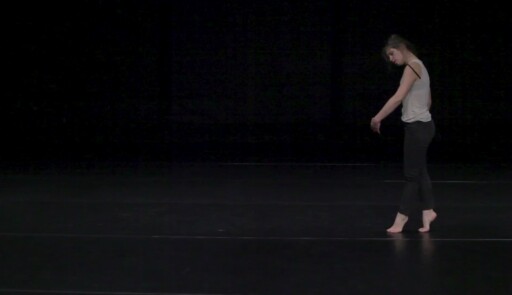
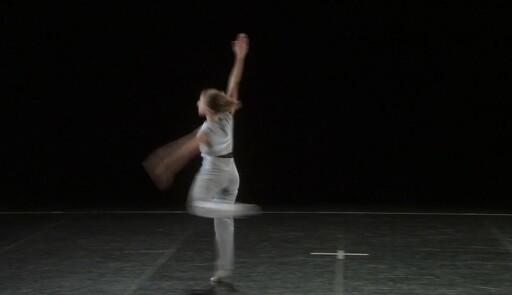
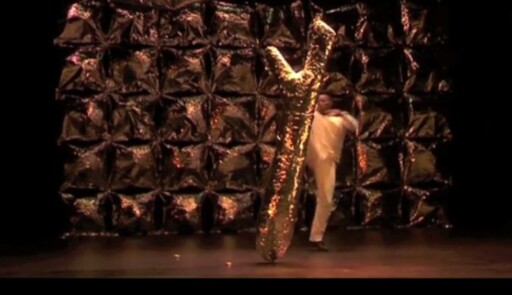
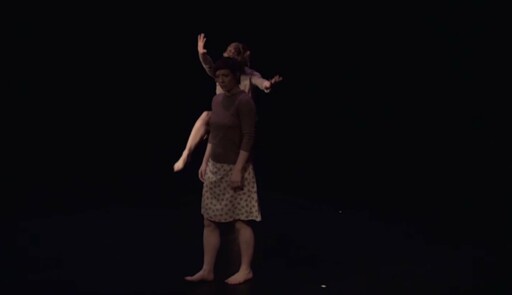
Débandade — Olivia Grandville — teaser
Creation 2021
“I would like Débandade to be somewhere between a musical, a vox pop, stand-up comedy, and an exorcism ritual.”
In 2019, at the invitation of the TAP in Poitiers, the CND in Paris, and the CCN in Montpellier, I had the opportunity to work with several groups of students aged 18 to 25. The piece, Nous vaincrons les maléfices (We Will Overcome Evil), which emerged from this work, looks back at the utopias of the 1970s through the eyes of today’s youth, marked by the threat of ecological collapse. The starting point is Michael Wadleigh’s documentary, Woodstock: Three Days of Peace and Music, dedicated to the legendary Woodstock gathering. Superimposed on the soundtrack, which serves as the dramatic thread, the students’ speeches question those of their elders regarding the excesses of a capitalist society that they have largely contributed to validating. This enlightening experience reinforced my curiosity about this generation born with the century and which questions it so well; it also laid the foundations for a process that I would like to continue here.
Why a piece about men?
All the more so when it comes to questioning a system of assignment that is widely challenged today? Meeting this diverse group of young dancers from very different cultural backgrounds and working with them, I became aware of a fluidity of gender that was fully incorporated, a multiplicity and complexity of perspectives embodied in the bodies themselves, which I wanted to explore.
I tentatively attempted to inquire about how they experience their masculinity today, specifically as contemporary dancers who share a common environment despite coming from geographically and culturally distant backgrounds. The reaction was immediate, revealing a real lack and need to put words to this gender confusion, which preoccupies them all to varying degrees and from sometimes diametrically opposed points of view.
In short, in the context of a resurgence of a healthy but very aggressive feminism, I wanted to ask them how they were doing. Because no, I don’t believe that the issue can be simply and easily resolved by politically correct positions, like any of those that question representations of power, knowing that it is always power itself, and the monsters it engenders, that must be questioned. And so this project for an exclusively male piece was born. A piece about men conceived by a woman, a transgenerational piece, a piece that would speak to women from male points of view and feelings.
Excerpt from The Rite of Spring, choreography by Pina Bausch, premiered on December 3, 1975, at the Opernhaus Wuppertal.